Polish Easter blends religious devotion with folk traditions, family gatherings, and regional practices that have been passed down for centuries. It is a celebration that touches almost every aspect of life, from the foods on the table to the art and decorations in homes and churches
Palm Sunday in Poland
Polish Easter celebrations begin on Palm Sunday, which commemorates Jesus’ arrival in Jerusalem. Across the country, people carry elaborately decorated palms to church for blessings.
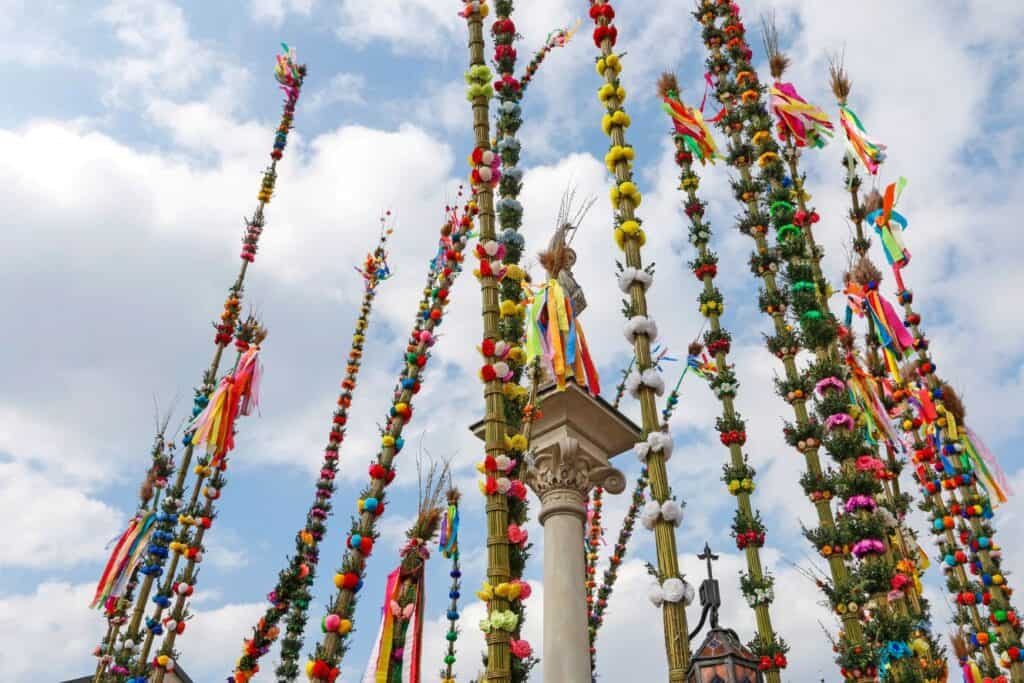
Crafting palms for Palm Sunday is one of the most striking Polish Easter traditions. They're not just simple green branches. Poles create elaborate works using a mix of natural materials, colors and symbolic decorations.
Traditionally, palms are made from willow branches that represent life and renewal, and decorated with dried flowers, herbs and colorful ribbons to symbolize the joy and beauty of the coming Easter.
In many towns, families spend weeks preparing their palms. Some are carefully constructed to last for generations, passed down from grandparents to grandchildren.
In towns like Lipnica Murowana, famous for its annual Palm Sunday competition, these palms can be taller than a person! The tallest ones can reach several meters high. In Łowicz and Kurpie, the palms are often shorter, but incredibly intricate, and they reflect the region's traditional folk art style.
Święconka: The Blessig of Easter Baskets
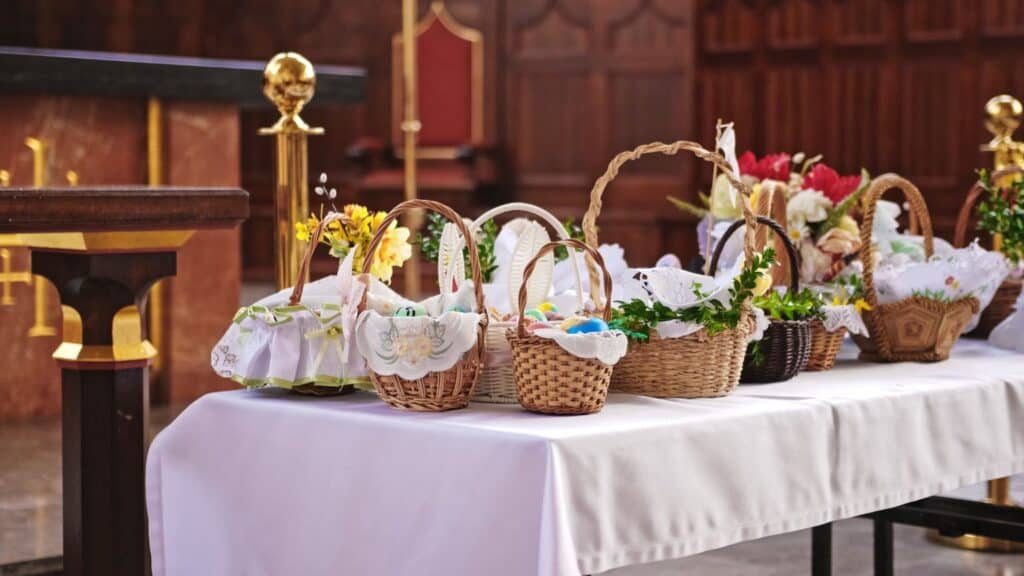
One of the most charming and uniquely Polish Easter traditions is Święconka, the blessing of Easter baskets. Families prepare baskets of symbolic foods on Holy Saturday, and these are brought to church to be blessed. Typical items in a Polish Easter basket include:
- Eggs, representing life and resurrection
- Babka (a sweet yeast cake)
- Sausage or ham, symbols of abundance
- Salt, bread, butter and horseradish
After the blessing, these foods are shared at Easter Sunday breakfast. While many countries have Easter food traditions, the blessing of baskets filled with such a variety of symbolic items is very specific to Poland.
Śmigus-Dyngus, Wet Monday
Another uniquely Polish custom is Śmigus-Dyngus, celebrated on Easter Monday. In many countries, Easter Monday is a quiet continuation of the holiday, but in Poland it is lively, playful, and even mischievous.
Traditionally, young people splash water on one another. Originally it was a symbol of cleansing and renewal in spring. Over time, it has become a nationwide celebration, often involving playful water fights, both in towns and villages. It’s a joyful and unexpected tradition that delights visitors, offering a very different experience from Easter celebrations elsewhere.
Pisanki, Poland's Decorated Easter Eggs
Polish Easter eggs, or pisanki, are another tradition that stands out. While painted eggs exist in many countries, in Poland the techniques, designs, and regional styles are extraordinarily diverse:
- Kraszanki: Eggs dyed with onion skins for natural earthy colors
- Wytłaczanki: Eggs decorated with carved patterns or pressed wax designs
- Łowicz and Kurpie eggs: Painted with bright folk motifs inspired by local costumes and embroidery
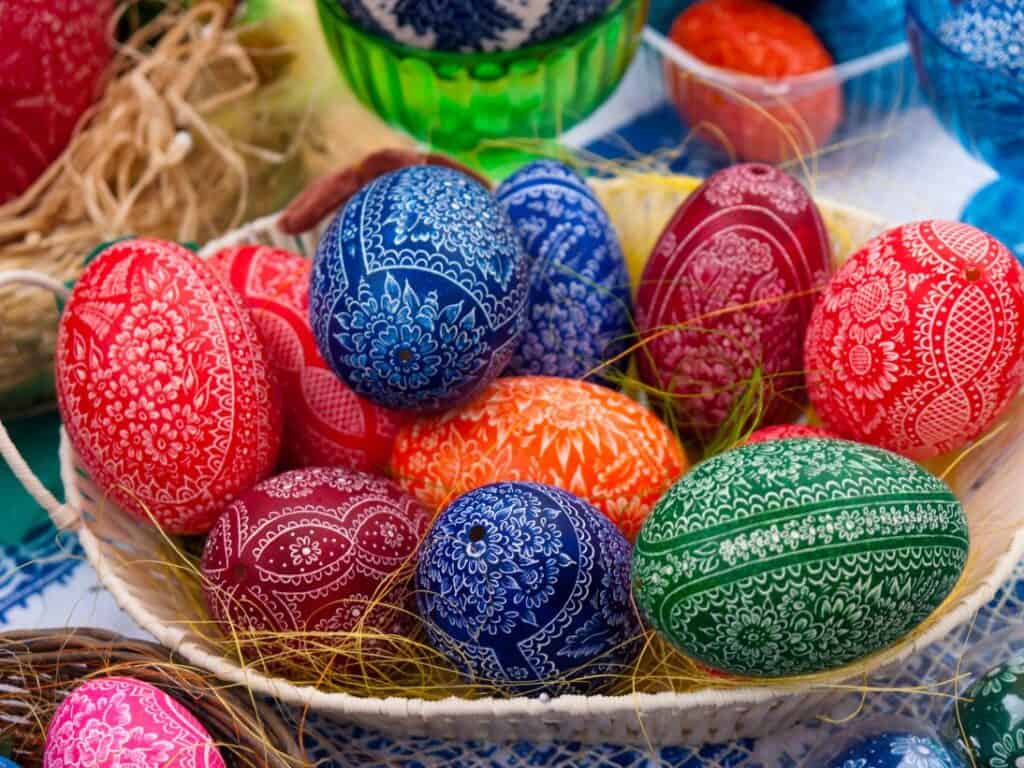
In many villages, families still hand-decorate eggs together, making it both an artistic and social tradition. Pisanki are displayed in homes or added to Easter baskets, combining religious symbolism with folk art.
Polish Easter is unique, because it combines faith, folk art and community in ways rarely seen elsewhere.


 LET'S DESIGN YOUR TOUR!