Poland is one of those places where faith is not hidden. It is lived, visible, and present in everyday life. The Catholic Church has played a central role in shaping the country's history, culture and identity for centuries. As you travel across Poland, it quickly becomes clear that churches, monasteries and sanctuaries are an essential part of the landscape. But some places stand out more than others. If you are looking for a meaningful journey, whether religious, cultural, or simply reflective, Poland offers something truly special.
Let us explore the most important pilrgimage sites in Poland. What connects all these places is that they are not museums. They are alive. You will see people praying, walking, sitting in silence, lighting candles. These are real moments, not staged experiences. And that is exactly why they are so compelling, even if you are not religious.
In Poland, pilgrimage sites are also places of history, spaces of architecture and art, landscapes designed for reflection, and meeting points of culture and identity. Visiting them is not only about faith. It is about understanding the country on a deeper level. And often, these are the places travelers remember the most.
Jasna Góra Monastery in Częstochowa
This is not only the most important pilgrimage site in Poland. It is one of the key places for understanding the country itself.
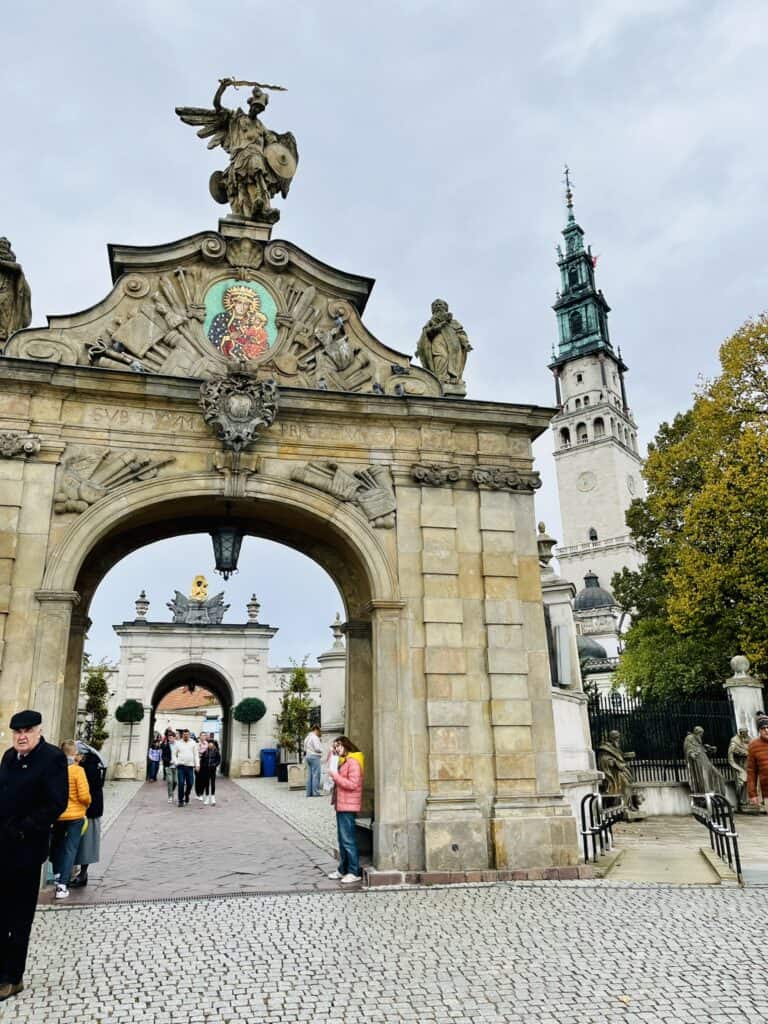
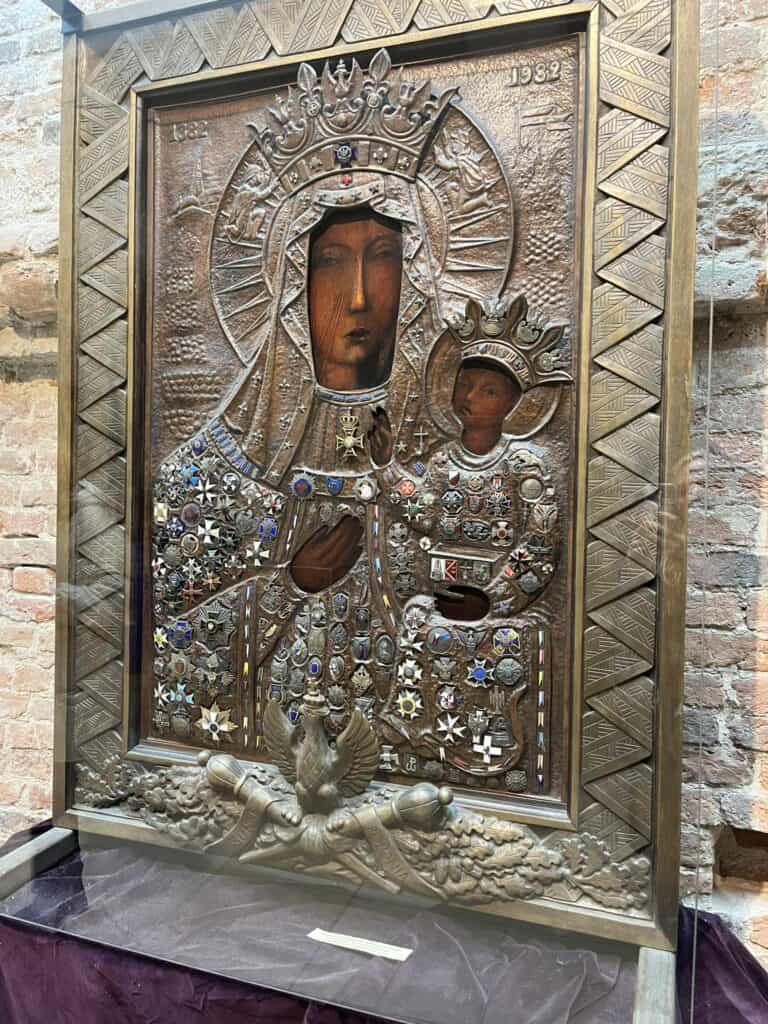
The monastery has been welcoming pilgrims since the 14th century and is home to the famous icon of the Black Madonna. For many Poles, this image is more than religious. It is a national symbol tied to moments of crisis, resilience, and hope. Kings, soldiers, and ordinary people have all come here in times of uncertainty.
Even if you are not religious, Jasna Góra offers something powerful. Its history is closely linked to defining events in Poland’s past, including invasions and struggles for independence. Walking through the complex, you are not just visiting a sanctuary, you are stepping into a place where faith and history have shaped each other for centuries.
In Poland during July and August, many Catholic pilgrims walk long distances to reach the monastery of Jasna Góra. About 120,000 people travel on foot for important feast days, and around 4 million visitors come each year. They visit mainly to see the famous painting of Our Lady of Częstochowa, which is believed to have miraculous powers.
How to Include Częstochowa in Your Private Poland Tour
Częstochowa is very flexible and easy to include in different routes. It can be:
- a one-day trip from Warsaw or Kraków
- a natural stop between Kraków and Warsaw, breaking up the journey
- combined with Łódź for a more off-the-beaten-path experience
This makes it one of the easiest pilgrimage sites to visit without changing your overall travel plan.
Kalwaria Zebrzydowska: a UNESCO World Heritage Site
Set among gentle hills and forests, Kalwaria Zebrzydowska feels more like a landscape than a single destination, with over 40 chapels and churches. The site was designed in the 17th century to recreate the layout of Jerusalem. Today, it is both a UNESCO World Heritage Site and a living place of pilgrimage.
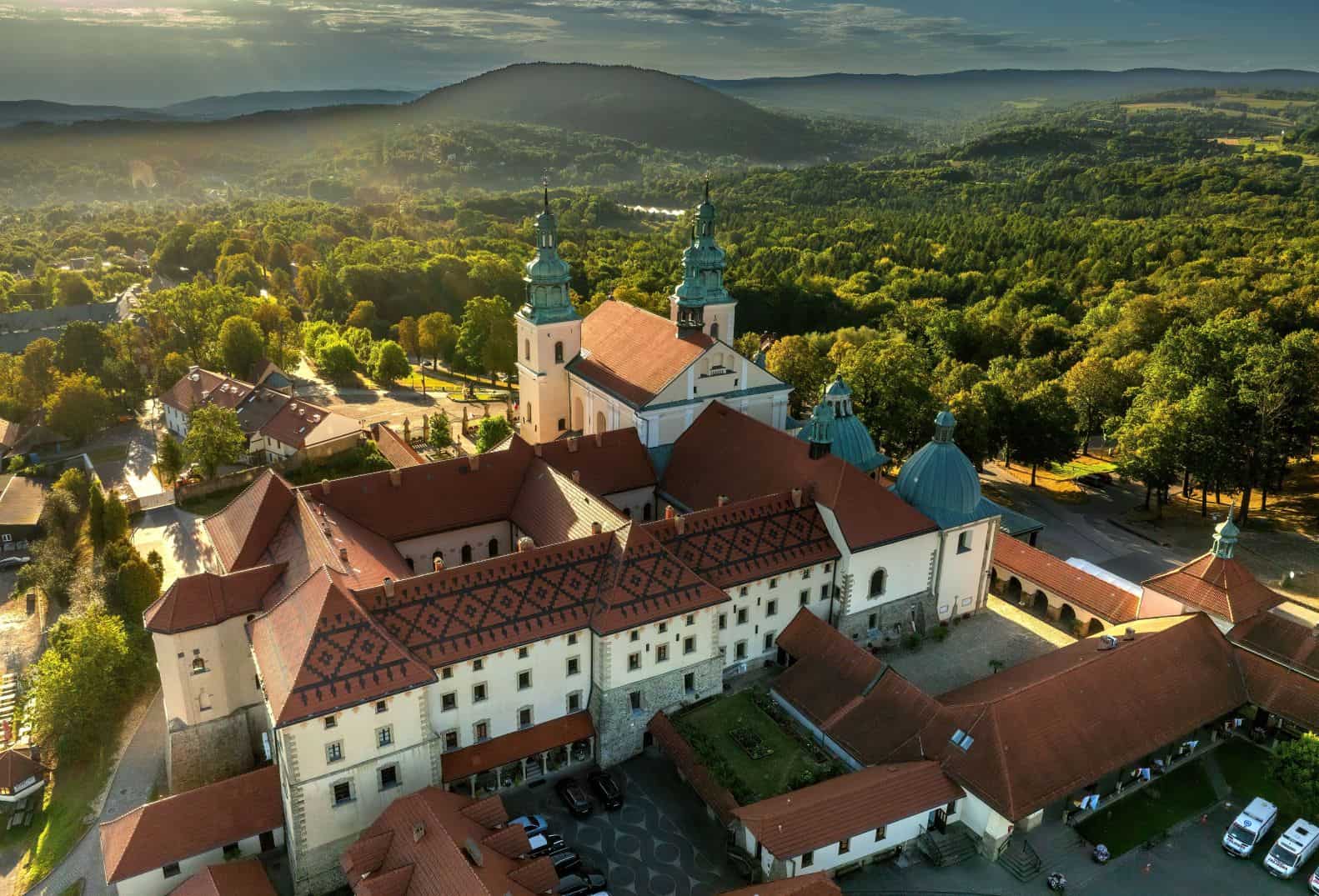
This type of site is known as a calvary, that is to say a series of chapels that represent the Stations of the Cross. It was the first calvary constructed in the Polish-Lithuanian Commonwealth. At the heart of the site stands the basilica, home to a revered image of the Virgin Mary. The sanctuary is both a place of Marian devotion and a center for reflecting on the Passion of Christ.
It is also closely connected to Pope John Paul II, who visited this place many times throughout his life. First as a child, and later as a priest and archbishop.
What makes Kalwaria Zebrzydowska special, even for non-Catholics, is the experience itself. Walking these quiet paths, surrounded by nature, you don’t need to follow the religious meaning to appreciate the atmosphere. It is peaceful, reflective, and almost meditative. Many visitors come simply for the beauty of the setting and the rare chance to slow down.
How to Include Kalwaria Zebrzydowska in Your Private Poland Tour
Kalwaria works perfectly as a half-day or full-day trip from Kraków. It is often combined with:
- Wadowice, the hometown of Pope John Paul II
- scenic drives through the foothills of the Carpathian Mountains
This creates a very balanced day: spiritual, cultural, and scenic.
Sanctuary of Divine Mercy in Łagiewniki
This is one of the most important modern pilgrimage sites in the world, yet it feels surprisingly accessible. Pilgrims come here from every continent, making it one of the most international spiritual places in Poland.
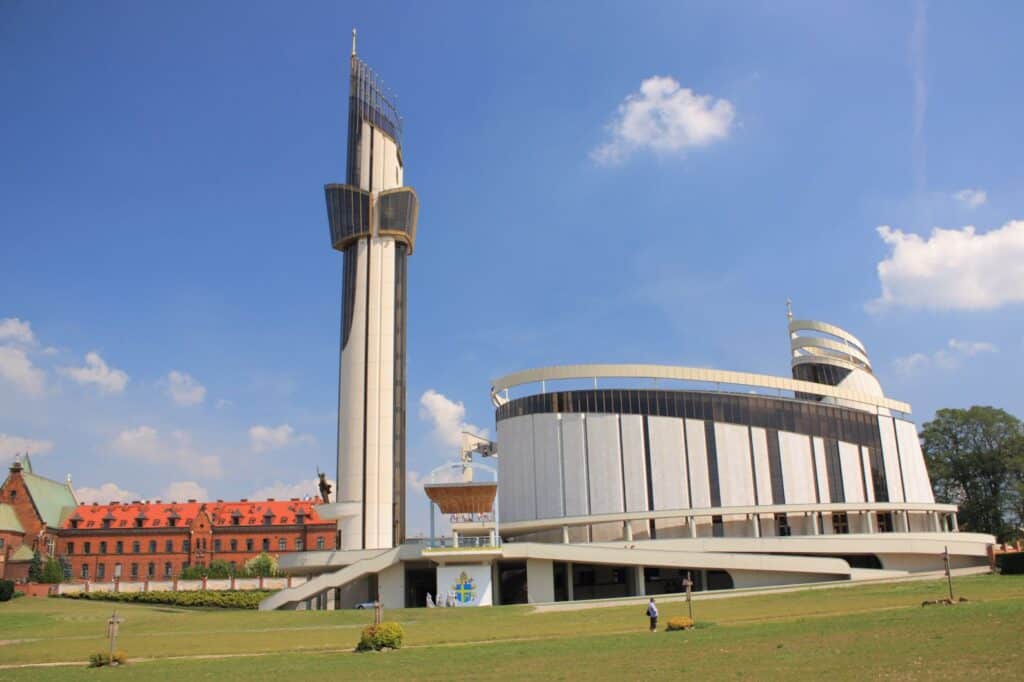
The sanctuary is connected to Saint Faustina Kowalska, whose message of Divine Mercy has reached millions globally. Based on her descriptions, the well-known image of the Merciful Jesus was created, and today copies of it can be found in churches all over the world. But the original painting, along with the relics of Saint Faustina, is kept here,
The site itself is made up of two very different parts. One is the older convent complex, with a quiet chapel where Saint Faustina lived and prayed. The other is a large, modern basilica built at the turn of the 21st century, designed to welcome the growing number of pilgrims. Its open, bright interior creates a calm and welcoming atmosphere.
Today, pilgrims come here from across the globe. But even for non-religious visitors, this is an interesting and meaningful stop, not only because of its spiritual importance, but also because it shows how an idea that began in Poland reached millions of people around the world.
How to Include the Sanctuary of Divine Mercy in Your Private Poland Tour
This is the easiest site to include, as it is located within Kraków itself. It requires very little extra travel time but adds meaningful depth to any stay in Kraków. It is often combined with a visit to Kalwaria Zebrzydowska and Wadowice.
Old Licheń Basilica
Licheń is impossible to compare with any other religious site in Poland. It is one of the most visually striking pilgrimage sites, inspired by St. Peter's Basilica in Rome. It is one of the largest churches in Europe, and its scale alone leaves a strong impression. The architecture is modern and monumental, quite different from the Gothic and Baroque churches visitors may expect.
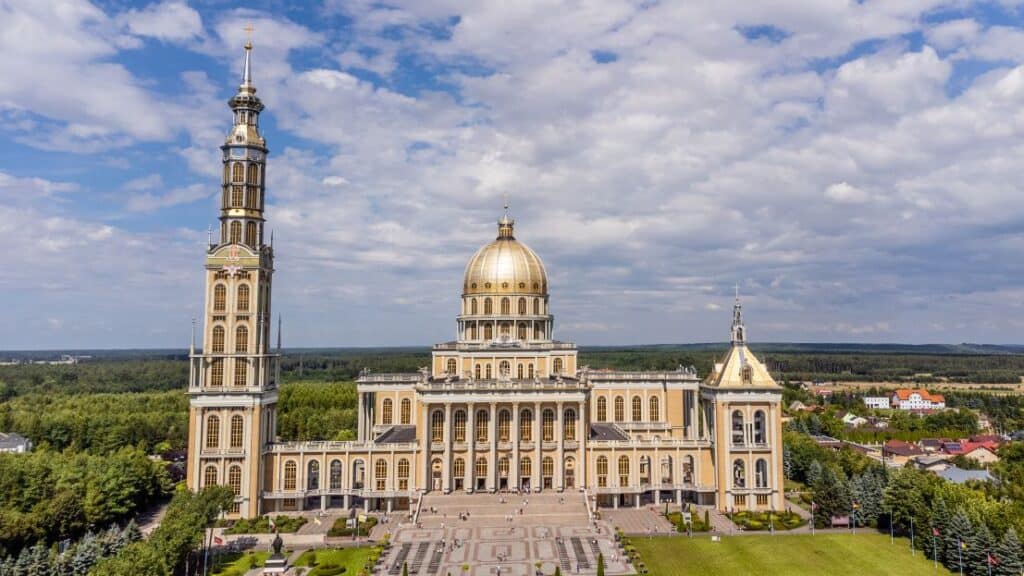
For some, it is a place of devotion. Licheń Basilica attracts around 1.5 million pilgrims each year. For others, it is simply fascinating. It reflects a different side of contemporary Poland: ambitious, expressive, and deeply connected to tradition in its own way. Even visitors without a religious background often find it worth seeing, if only to understand how faith continues to evolve in the modern world.
How to Include the Licheń Basilica in Your Private Poland Tour
Licheń is slightly more remote, but that’s part of its appeal. It works well:
- as a stop between Warsaw and Poznań
- as a stop between Łódź and Poznań
Or it can be part of a less conventional route exploring central PolandIt’s a great addition for travelers who want to go beyond the most obvious destinations.
Niepokalanów Monastery
Niepokalanów tells a very different story one that connects faith with courage in the face of history.Founded in the early 20th century, it became closely associated with Maximilian Kolbe, who later gave his life in Auschwitz, offering himself in place of another prisoner.
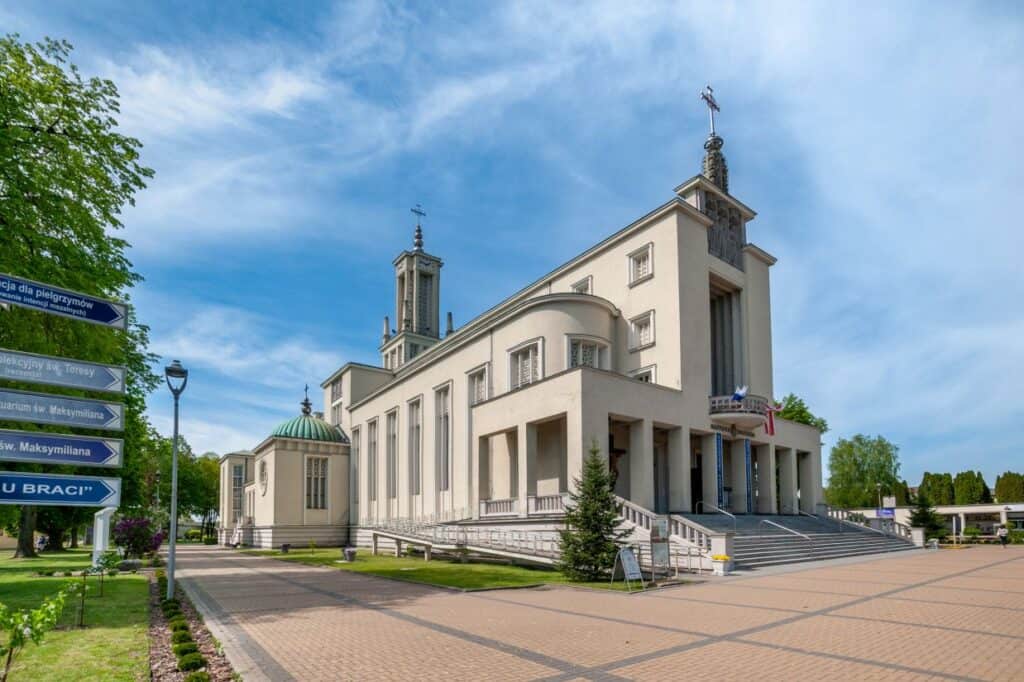
The monastery itself is simple, almost modest. But that is exactly what makes it powerful. It is not about grandeur, it is about values, choices, and human dignity. Even for non-Catholics, this is a deeply moving place that invites reflection on moral courage and sacrifice.
How to Include Niepokalanów in Your Private Poland Tour
Niepokalanów is ideal as an excursion from Warsaw. It is often combined with:
- Warsaw sightseeing
- a visit to Żelazowa Wola for a mix of spiritual and cultural heritage
This makes for a calm and meaningful day outside the capital. It can also become part of a longer tour, combined with a visit to Płock or Świnice Warckie, places connected to the life of St, Faustina.
A Poland Journey Designed Around You
What makes a private tour special is not just the comfort, it's the flexibility. Instead of following a fixed route, you can spend more time in places that natter to you, add meaningful stops along the way and travel at your own pace, without rushing. Our tour consultants will be happy to connect all the most memorable places in the right way and create a fully tailor-made Poland tour for you, or add a private extension tour before or after your group tour of Poland.


 LET'S DESIGN YOUR TOUR!